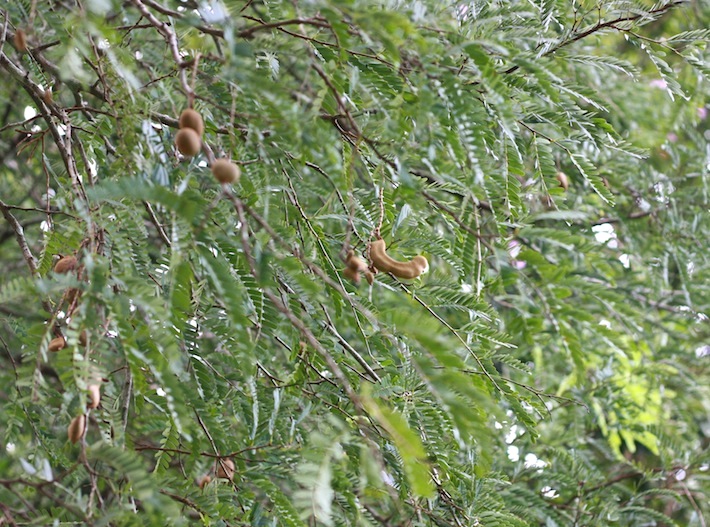
You can follow the path of any spice by its use in local dishes. But for tamarind, it’s as easy as following the 50 foot tree it grows on.
That’s because the tamarind tree, indigenous to Africa, is found in warm climates all over the world. And it doesn’t travel this much unless it’s carrying something special.
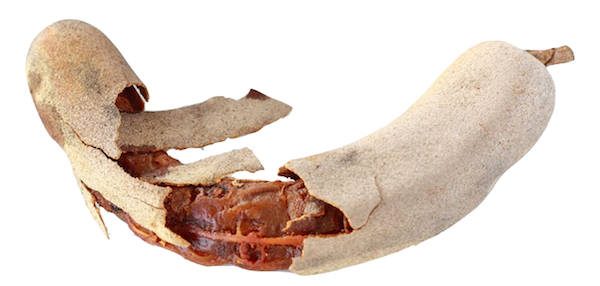
Inside the bulbous, rigid, brown pod that hangs from the tree, the tamarind spice is the sticky, reddish-brown fruit pulp that encases the inedible seeds. Break the pod open when it’s still green and you’ll know why in Malaysia and Indonesia they call tamarind, Asam Jawa or Buah Asam, meaning ‘Javanese Sour’ and ‘Sour Fruit’. While the green pulp is very sour and acidic, it is still used in many savory dishes.
But for most, tamarind is best when it has ripened into a tangy, sweeter fruit. Perfect for jams, juices and ice creams, and as the essential ingredient in Worcestershire Sauce and HP Sauce.
In Asia, the tartness of tamarind is combined with hot spices like chili to make sure your taste buds are working. It’s an amazing blend that you can find in curries in south India and in the famous pad thai noodle dish in Thailand.
Packed with vitamin B and of all things, calcium, this spice is good for you too.
Still not convinced of tamarind’s magic? How about an eco-friendly way to polish brass and copper? Just mix tamarind with a bit of salt and water, rub it on, and voilà!
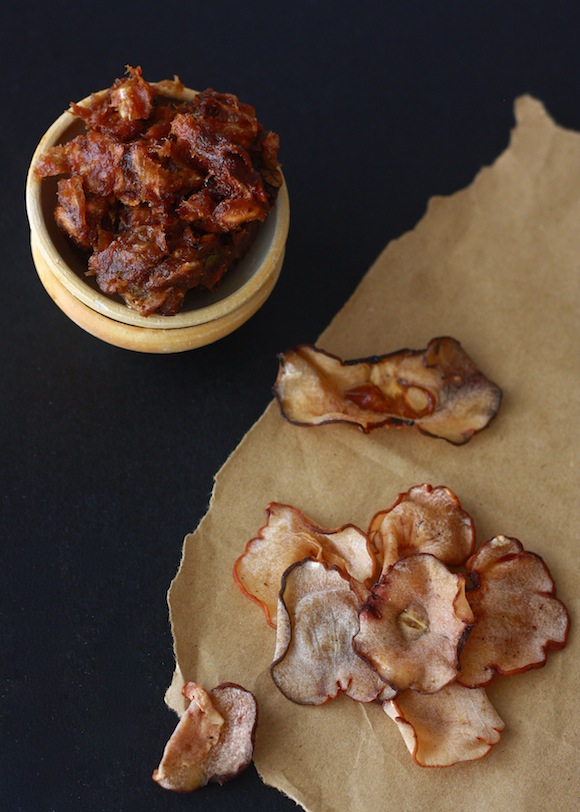
In the photo above, the pulp on the left is what most of us know as tamarind. However, there is some confusion with the dried slices of fruit on the right, since it can also be referred to as tamarind.
The dried slices are from a small, yellow, pumpkin-shaped fruit, which bears no resemblance at all to tamarind pods. That's because the fruit is from a completely different tree called asam gelugor (Garcinia atroviridis), which is native to Malaysia and Thailand. The fruit slices are also known as Tamarind Peel, or asam keping in Malay. Tamarind peel is more sour than tamarind pulp, so it is not as dynamic an ingredient, and therefore only used as a souring agent in cooking, as it is in Penang’s iconic dish - Asam Laksa.
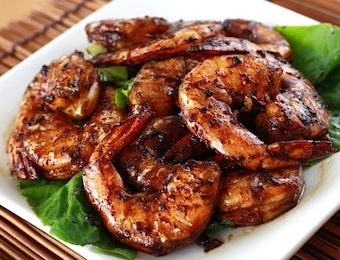
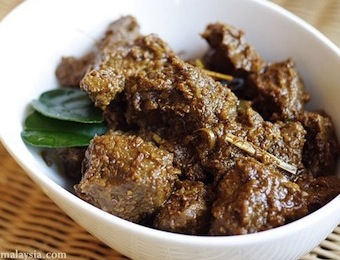
For a taste of tamarind, try one of these delicious recipes:
For a taste of tamarind, try one of these delicious recipes:
|
|
|
|